
Tech Wars: Which Technology Should I Choose for My Career?
Exploring Technology Trends: An Analysis Between Established Companies and Startups. This article examines the technological clash in the corporate landscape and the emerging startup sector. From the robust strengths of established enterprises to the innovative agility of startups, we analyze the trends and demands shaping the current technology panorama. Are you an adaptable tech professional? This analysis is essential for understanding the digital playing field.
The Tech Stacks Game! 🎮
You’re immersed in the world of technology and want to know the best tech stacks to land that dream IT job. Want to know which one is best? The answer isn’t simple, but let’s dive into this topic.
For those seeking a quick answer, there isn’t an absolute “best.” It depends on the type of companies you apply to and your existing knowledge. The market offers options for everyone, but some technologies are in much higher demand, leading to more job openings and making it easier to receive offers. If your goal is to secure a job quickly and have a broader range of options, go for “the hot new stuff” – the languages and frameworks that have become trends and are in high demand.
To understand this, let’s analyze the market players:
Major Players: Standard Enterprises
Enterprise-Level Technologies:
Large enterprises typically lean towards robust and proven technologies. Java, .NET, and older PHP frameworks remain strong. They value stability and scalability.
Legacy Systems:
Often, standard enterprises have existing systems that require maintenance. Therefore, skills in maintaining and updating legacy systems are valuable.
Diverse Technology Stacks:
Due to the scale of their operations, these companies may have a mix of technologies. You might find a combination of Java for the backend, React for the frontend, and perhaps some Python for data analysis.
DevOps and Cloud:
With large-scale operations, there’s a strong drive towards DevOps practices and cloud technologies like AWS or Azure.
New Players: Startup Landscape
Agile and Flexible:
Startups focus on speed. They often opt for more agile technologies and frameworks to iterate quickly and pivot as needed.
Modern Technology Stacks:
Startups often jump on the MERN/MEAN stack bandwagon. These technologies allow them to build and scale modern web applications quickly.
Cloud-Native:
Cloud-native technologies are essential. Startups appreciate the flexibility and cost-effectiveness of cloud platforms.
Full-Stack Engineers:
Startups highly value versatile technical talent. Full-stack engineers who can handle both frontend and backend are golden. They can play various roles in an agile team.
The Common Thread: Adaptability
While technological preferences may differ, there’s a common theme: adaptability. Both standard enterprises and startups value tech professionals who can learn on the fly, adapt to new tools, and contribute across the entire technology stack.
Distribution by Area
Frontend
When it comes to the client-side, MERN (MongoDB, Express.js, React, Node.js) and MEAN (MongoDB, Express.js, Angular, Node.js) are the rockstars. React and Angular are like the pop stars, making the user interface their playground. If you want to be at the center of the action, that’s your path!
VueJS is steadily gaining traction and market share, and Svelte is also an excellent tool making inroads. However, they still need to generate more momentum to be highly attractive for securing a job (quickly, that is). While opportunities exist, they are not as abundant as those for React or Angular. In this scenario, the objective is to target technologies that offer the greatest number of possibilities.
Backend
On the server side, it depends on the market. For traditional startups, Ruby with RoR (Ruby on Rails) still sees demand, but it’s becoming scarcer and more niche, primarily for those who have already built their platform on that stack. New projects typically now start with NodeJS or Python. However, PHP remains a force to be reckoned with, especially with Laravel. It’s like the reliable hero always there for your web projects. Drupal also holds its place as a solid CMS for building advanced and highly configurable websites!
The Hard Data: Numbers That Matter 📊
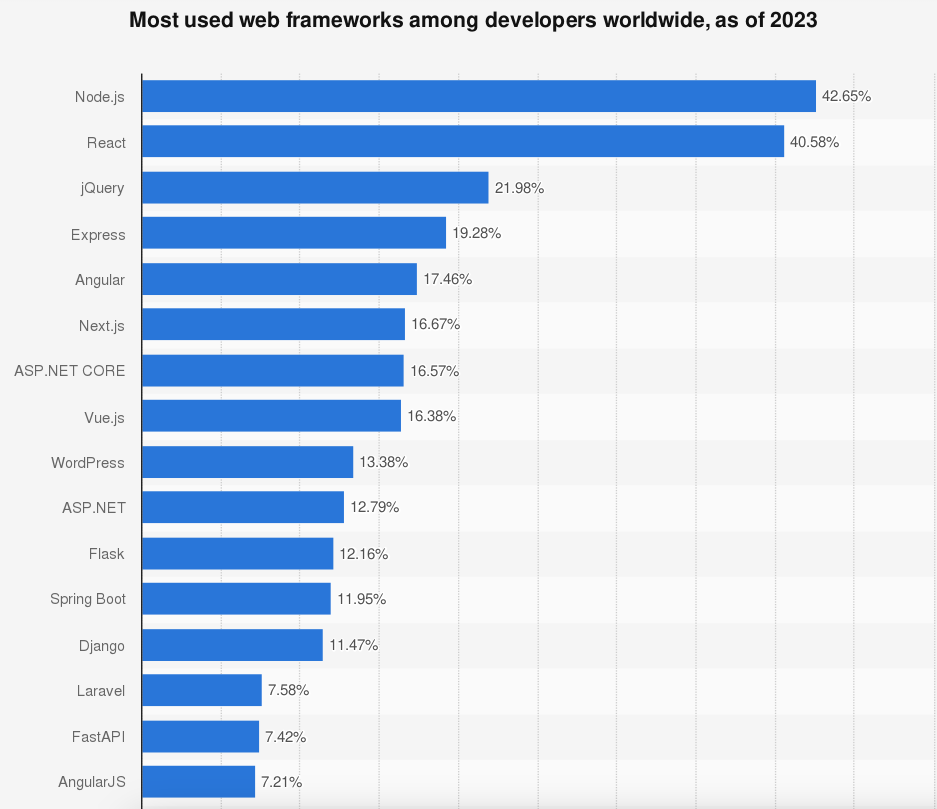
According to statistics as of January 2023, the most used frameworks for both backend and frontend are distributed as follows:
Job Opportunities:
MERN/MEAN sees a lot of action, but Laravel and PHP still have many contenders in the job market.
Salaries:
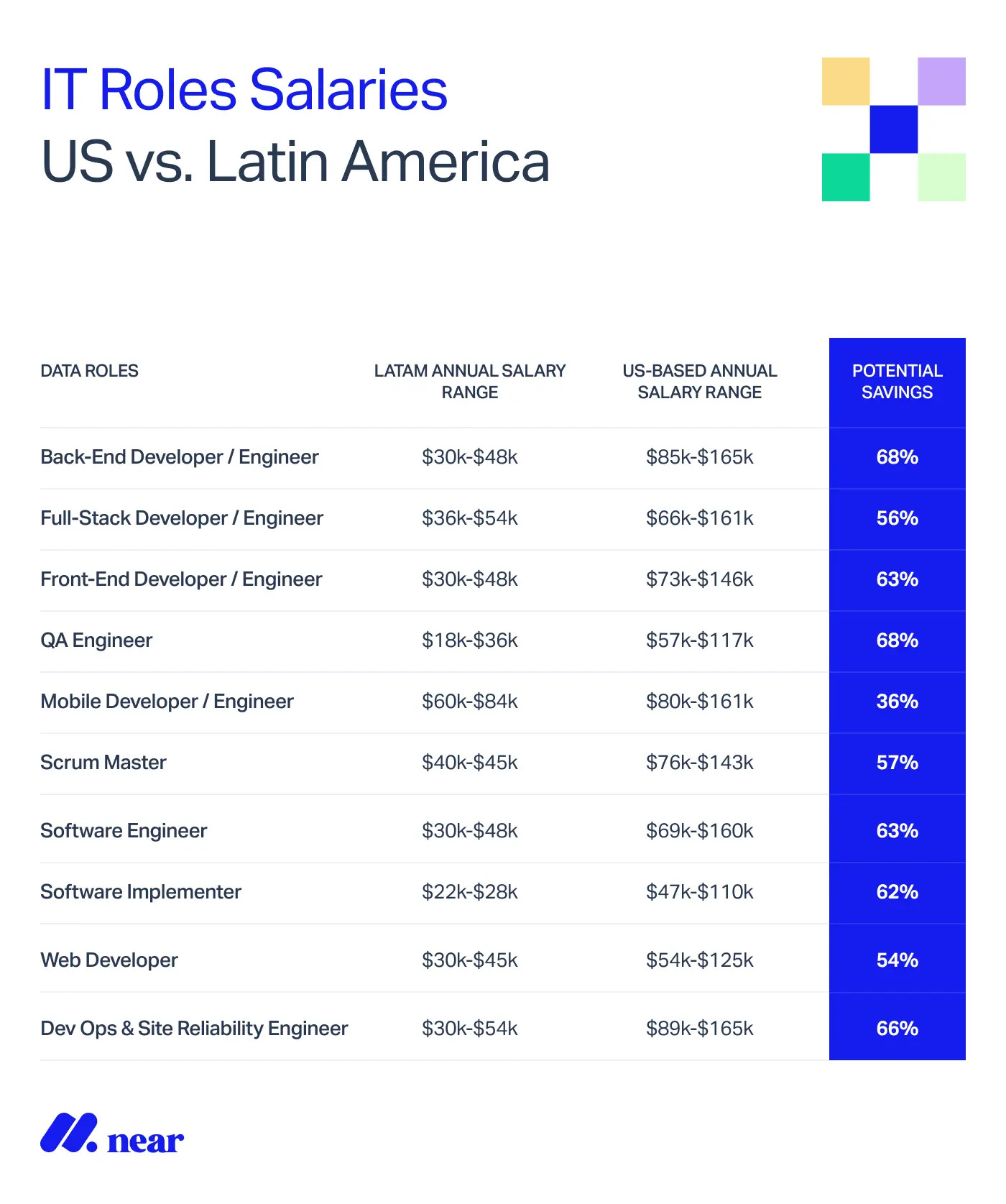
Check Glassdoor or LinkedIn for an idea of average salaries in your region. The article on salaries in LATAM can assist you.
This can serve as a reference, information from Near company:
Community Engagement:
Check information on GitHub, forums—everything counts! An active community signifies robust support. The more information you can find, the easier it will be to resolve issues or find someone to assist you with the specific technology you’re using. If a community is difficult to find, resolving issues will be much more complicated.\
Industry Trends:
Stay abreast of technology surveys and reports. What are large enterprises using? For this, it’s important to read about trends, changes over the last 5 years, and especially usage statistics.
Project Scope:
MERN/MEAN for modern web applications, Laravel for certain types of web applications. It all depends on the project!
Company Tech Stacks:
Research the tech stacks of companies you’re interested in. Tailor your skills according to what they are seeking.
Conclusion: Forge Your Own Path! 🌟
Ultimately, the choice among these tech stacks depends on your interests, preferences, and the kind of work culture you thrive in. It’s like choosing the perfect bike for the terrain you want to conquer. Good luck on your tech adventure! 🚴♂️💻